Jerry Brown Braid

Jerry Brown Braid
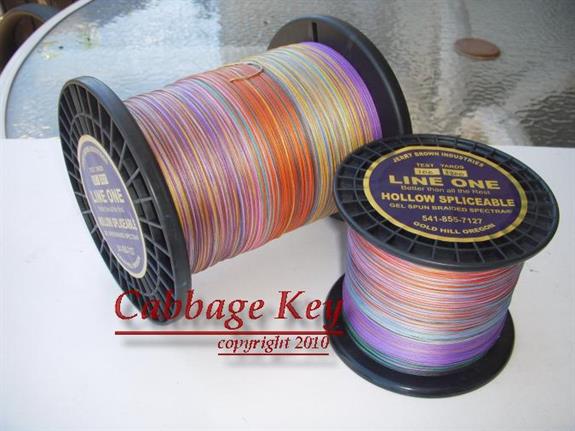
New Multi Color Hollow Depth Indicating
Line
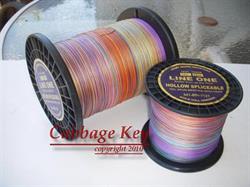
Introducing Jerry Browns NEW Depth Indicating Multi Color Braided Hollow Spectra Jerry Brown just released his Multi Color Depth indicating line. This 10 color JB Hollow braid changes color every 10 yards enabling the angler to know precisely where his lure/bait is
in the water column. For the Jigger, this is a must have to maximize proper bait presentation
Ideal for jigging and trolling. Available NOW in 150 to 2500 yd spools in 40lb thru 200lb test
hollow
Scroll down to place your order

Huge price reduction on JB 80 & 200 hollow
braid...
FREE
SHIPPING on USA orders, low International rates from
$9.00
Cabbage Key has the best selection and the best price on Jerry Brown Braid
Daho Hollow Rigging needles are in
stock, ideal for hollow spectra. check them out here
Don't forget to read Jerrys tips and instructions at the lower portion of this
page
Cabbage Key is proud to offer Jerry Brown Braid. Available
in both industry standard solid and Hollow braided configuration. JB spectra is superior to all other
brands.
JB spectra is uncoated, no messy dust or clumps of waxy residue to contend with,
not to mention you will spool more line on due to its smaller, consistent
diameter. Jerry
Brown hollow spectra has one more very important advantage, the ability to construct a knotless
splice. Testing at 100%, a simple latch hook or doubled over piece of wire leader can be used to splice
2 sections of hollow braid resulting in a virtually undetectable joint. You can also join 2
lines of varying test to produce a custom rig depending on your personal needs. We have used 130
hollow as a base on the reel, then added a section of 200 lb test hollow for more abrasion resistance for
fishing structure, great for Gulf of Mexico Oil Rigs.
Inevitably a chafe will occur on your line, simply cut it away
and resplice the line. Jerry himself tells me his personal reels have about a half dozen or more splices in them.
The splice will test at 100%. No need to toss away or replace expensive line
A popular rig that allows some stretch is a hollow spectra/
mono combo. The mono is inserted about 5-6 feet into the hollow spectra, drawn tight, then chemically bonded
using a special 2 part adhesive at the junction of the splice. A length of 30 Lb Spectra should be tied into a
series of half hitches spanning both lines at the joint. Line One special 2 part adhesive should be
applied to the junction, over the half hitches , chemically bonding the ensemble together. This results in a
chinese handcuff type of splice that tests at 100%
This spectra mono connection should only be done on the white
uncolored hollow spectra as the chemical bond will not sufficiently saturate the coated colored lines to achieve a
100 percent bond
This system has proven itself to be the ultimate connection
for mono leader/spectra rigging. It offers the ability to wind on a long leader of your choice, with no
bulky knots to foul on the rollers or eyelets on the rod. Many anglers have also attached another piece
of hollow spectra with a loop on the end. This rig allows you to employ a wind on with a loop
to loop connection
It is important to note that hollow lines of 60lb test
and heavier are quite easy to splice. 40 Lb
Hollow is NOT SPLICABLE. Generally , using white uncoated line
is easier to work with.
Line One Hollow core, available in a wide range
of weights, lays flat, resists burying, and spools a greater quantity than round
line.
Considering the obvious advantages and superior quality, Jerry Brown Line One
surprisingly costs less than the more widely known lines.
What line test braid is appropriate for my
reel?
This is best answered by the drag setting you will be using
your reel. 3 times the maximum drag is a good rule of thumb. For instance if you set an Avet EX50 at its
maximum setting of 50 pounds drag at strike, the proper line would be 130 to 150 lb test braid. Anything less will
be like putting bicycle tires on the back of a souped up Vette. Just too small. You should know the drag settings
you will most likely use and go from there. You can always inexpensively change the topshot or wind on leader to
suit the local conditions and bite.
Another consideration should be the type
of boat you will most likely be on. If you fish on a private boat, charter boat, or have the capability of
chasing a fish down, that may dictate a different spooling for your reels. Cattle type boats require you to
get your fish to the boat with a minimum of playing to avoid tangles with other anglers who may also have
fish on at the same time. Big drag pressure and stout line test are required in this
instance.

Order below, Free US Shipping , Low int'l
Rates
Any Questions, please email us here 
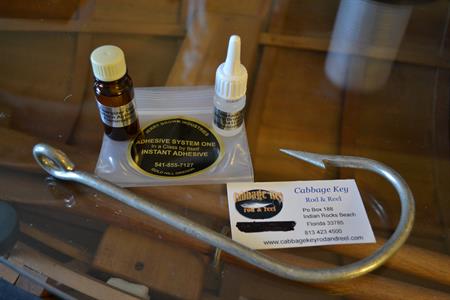
Jerry Brown 2 Part Adhesive, simply the
best
2 ounces,enough for 30 plus splices..............$20.00 dlvd

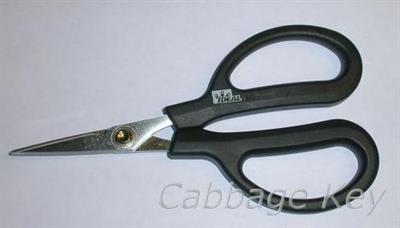
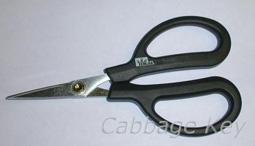
Jerry Browns braided line scissors, the best..period
These scissors will cut braid cleanly even when the line is not taught, something
no others will do. Over the years, we have tried every brand regardless of cost.
These have proven to be the best, why waste your time with others,
Get the best
Jerry Bown Scissors.........................................$20.00
delivered
__________________________________________________________________________________

Jerry Brown Multi Color Depth Marker Braid
This line has 10 different colors that change every 10 yards.
ideal for precise line out measurement. Perfect for jigging and trolling or simply placing your baits to the
exact depth the fish are hanging at. Hollow only, Delivered Prices to
the US, Low int'l rates
40 Lb JB Multi Color Indicator
line Prices are delivered USA
300/40..............................$52.00
600/40..............................$86.00
1200/40............................$166.00
2500/40............................$318.00
60 Lb JB Multi Color Indicator
Line Free US Shipping
300/60.............................$55.00
600/60.............................$94.00
1200/60...........................$181.00
2500/60...........................$343.00
80 Lb JB Multi Color Indicator
Line Free US Shipping
300/80....................................$76.00
600/80....................................$143.00
1200/80..................................$258.00
2500/80..................................$516.00
100 LB JB Multi Color Indicator
Line Free US Shipping
300/100...................................$76.00
600'100...................................$143.00
1200/100.................................$258.00
2500/100.................................$483.00
130 Lb JB Multi Color Indicator Line Free
US Shipping
300/130........................................$60.00
600/130........................................$99.00
750/130 fills a 50wide..................$127.00
1200/130......................................$186.00
2500/130......................................$351.00
200 LB JB Multi Color Indicator Line Free US
Shipping
300/200.........................................$76.00
600/200.........................................$138.00
1200/200.......................................$241.00
2500/200.......................................$450.00
Jerry Brown Hollow Braid
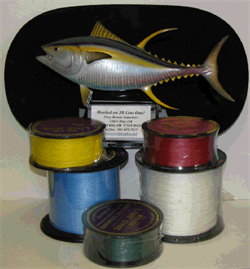
White, High-Vis Yellow, Green, Blue, and
Red, Delivered Prices to all 50 States, low rates for overseas customers!
*Red is available in 200lb Hollow
40 lb HOLLOW (difficult
to splice, very small in diameter) DL'VD Prices USA
300/40.........................Reg $50.00 Sale Price
$46.00
600/40 ........................Reg $89.00 Sale Price $78.00
1200/40...................Reg $169.00 Sale Price
$149.00
2500/40...................Reg $319.00 Sale Price
$289.00
60 Lb Test HOLLOW Spectra, D'lvd Prices
USA
300/60.......................Reg $65.00 Sale Price
$49.00
600/60.......................Reg $109.00 Sale Price $85.00
1200/60..................Reg
$179.00 Sale Price $165.00
2500/60..................Reg $339.00 Sale Price
$312.00
80 Lb. Test HOLLOW Spectra, D'lvd prices USA
300/80................$89.00 was $79.00 SALE $69.00
600/80................$159.00 was
$149.00 SALE $129.00
1200/80..............$279.00 was $249.00 SALE $234.00
2500/80..............$539.00 was $499.00 SALE $469.00
100 Lb Hollow Spectra Dlv'd prices
USA
300/100.............................$89.00 Sale
$69.00
600/100...........................$149.00 Sale
$129.00
1200/100.........................$259.00 Sale
$239.00
2500/100.........................$469.00 Sale
$439.00
130 Lb. Test Hollow Spectra, D'lvd Prices USA
300/130...........................$69.00 SALE $54.00
600/130............................$109.00 SALE
$89.00
750/130, fills a 50W.......$129.00 SALE
$115.00
1200/130......................$189.00 SALE
$169.00
2500/130......................$339.00 SALE $319.00
200 Lb. Test Hollow Spectra DL'VD Prices
Usa
150/200.................$59.00 Dlvd Sale $46.00
300/200.................$89.00 Dlvd Sale
$69.00
600/200.................$149.00 Dlvd SALE
$125.00
1200/200..............$259.00 Dlvd wow SALE $219.00
2500/200..............$459.00 Dlvd wow SALE $409.00
300 Lb HOLLOW Spectra, Dlvd Prices
USA
150/300................$72.00 Dlvd Sale
$49.00
300/300..............$109.00 Dlvd Sale
$84.00
600/300..............$199.00 Dlvd Sale
$149.00
1200/300............$309.00 Dlvd Sale
$289.00
500 Lb HOLLOW Spectra ,White only,
Dl'vd Prices USA
50/500.........................................$37.00
150/500.......................................$62.00
300/500.......................................$112.00
600/500.......................................$192.00
1200/500......................................$359.00
800 lb. JB Hollow Spectra, White only,
Dl'vd prices USA
50/800.....................................................$53.00
150/800.....................................................$98.00
300/800.....................................................$174.00
600/800.....................................................$319.00
1200/800...................................................$589.00
1000 lb. JB Hollow Spectra ,
White only, Dl'vd Prices USA
50/1000...............................................$86.00
150/1000..............................................$169.00
300/1000..............................................$339.00
Jerry Brown industry Standard Spectra- Solid, non hollow
30 Lb Standard Not Hollow, White, Green, Yellow, Blue, or Red. Prices include USA shipping, we have low overseas rates
too!
300/30........................$38.00 Dlvd Sale
$32.00
600/30........................$65.00 Dlvd Sale
$54.00
1200/30......................$99.00 Dlvd Sale
$89.00
2500/30......................$175.00 Dlvd Sale
$169.00
50 Lb Standard Not Hollow, White & Green only
300/50........................$43.00 Dlvd Sale
$34.00
600/50........................$65.00 Dlvd Sale
$54.00
1200/50.....................129.00 Dlvd Sale
$105.00
2500/50....................$215.00 Dlvd Sale
$193.00
65Lb Standard Non- Hollow
300/65........................$49.00 Dlvd Sale
$39.00
600/65........................$79.00 Dlvd Sale
$69.00
1200/65....................$129.00 Dlvd Sale
$119.00
2500/65....................$239.00 Dlvd Sale
$229.00
80Lb Standard Not
Hollow
300/80......................$45.00 Dlvd Sale
$42.00
600/80......................$89.00 Dlvd Sale
$78.00
1200/80................$164.00 Dlvd Sale
$142.00
2500/80................$289.00 Dlvd Sale
$269.00
100 Lb Test SOLID Spectra
300/100..................$59.00 Dlvd Sale
$49.00
600/100..................$99.00 Dlvd Sale
$89.00
1200/100................$179.00 Dlvd Sale
$159.00
2500/100................$309.00 Dlvd Sale
$299.00
130 Lb Test Solid JB Spectra
300/100.................$Sale priced $53.00
600/130.................$Sale priced $97.00
1200/130...............$Sale priced $169.00
2500/130...............$Sale priced $315.00
200 Lb Test
Solid JB Braid
300/200..................$ Sale priced
$59.00
600/200..................$ Sale priced
$115.00
1200/200................$ Sale priced
$189.00
2500/200................$ Sale priced
$345.00
If you need more information call us toll free
at 1 877 257
3985
The Following is from Jerry Brown himself, some excellent tips and info about
braid , how to utilize it, while debunking some myths about the
line

Personal Safety: We put safety
first!
Concerns about the likelihood for Spectra® to cause cuts have been grossly
exaggerated. Spectra® is very small in diameter. But, as with monofilament, the smaller the diameter, the greater
chance there could be for cuts. Spectra® should be spooled on under tension which emphasizes the need for
precaution during this operation.
We suggest that you wear gloves when spooling. Light weight knitted polyester
gloves work well; a pair costs only a dollar in the sundries department of most supermarkets. Heavy duty gloves are
usually unnecessary except maybe for very heavy lines requiring very high tension. Spool slower when using higher
tension to reduce any potential problem.
Spooling reels always involves at least one line cut. Spectra® is difficult to
cut because it is made from hundreds of individual fibers; even sharp tools can be dulled quickly. Now-a-days
single edge “razor blades” are made mostly for scraping tasks rather than for shaving; some hardly cut Spectra®
without hacking your way through. All dull quickly. They are not recommended.
X-ACTO® tools are very sharp with inexpensive replaceable blades. They are a
much better choice than razor blades. The handle keeps your hands away from the blade and they stay sharp for a
reasonable time.
Spectra® scissors are offered by a number of companies. Most start out dull
and get worse quickly. After a careful search, we have found just one design that works great and lasts a very long
time. These Ideal® Scissors make very clean cuts, do not compress hollow lines closed and are safe to use. “Ideal®
Scissors” are hands down best way to cut Spectra®. They are so good that they will cut a slack line. Try that with
any other brand. They also double as mono shears, two tools in one.
Corrosion Prevention: An ounce
of prevention for the reel.
Spectra® has a very long useful life, years, unless seriously mechanically
damaged. On its own, Spectra® does not ever cause any reel spool corrosion, but salts in water, over a long period,
can. Aluminum reel spools are not corrosion proof. The anodizing process often is more for looks than for
long-lasting corrosion resistance. For added protection, we suggest that you wax and buff the empty spool with a
good carnauba car wax before putting on line for the first time. Neutral color Kiwi Shoe polish works also. This
high-melting temperature wax helps by sealing the porous surface of the aluminum spool against saltwater
penetration and subsequent corrosion.
Getting Started: Start with
the free end of a line from a rotating spool!
If you carelessly start spooling off line from any spool without
first making sure that you don’t have an under-wrap, you can create a major problem. With an unnoticed under-wrap,
the line will spool off quickly for quite a number of yards, all-the-while digging into the service spool deeper
and deeper, until tension becomes too great to continue, maybe even breaking the line. The first impression by the
surprised observer is to believe that the spool contained many under-wraps from the factory. In subsequent actions
hoping to correct the problem he has caused, he creates even more problems along with great frustration. Too late,
but upon serious reflection, he should realize that if the manufacturer fixes one end of the line to a spool and
begins continuously winding on line, no under wrap can possibly result. Before spooling, check that you have not created an under-wrap in the top few feet of
line.
After removing a portion of the line from a spool, tape the end of the
remaining line to the side of the spool so that an under-wrap is less likely the next time you take line from that
spool.
Make sure that you are taking off line from a rotating spool not
from the end of the spool otherwise line twist will occur.
Myth Busting: The
truth about line slipping on the spool etc.
Many mistakenly believe that Spectra® will slip on the spool unless you take
Draconian measures to prevent it. Experience has clearly shown that putting on several layers of mono, Dacron or
duct tape are totally unnecessary. This practice is not recommended to solve a problem that does not even exist.
Braided line grips the spool much like tread on a tire grips the road better than a smooth one with an infinitely
small contact area.
Before you start spooling, form a good knot, (such as the Berkley Trilene
knot) cinch it tightly on one side of the spool leaving a long tag end to be laid across the arbor. Spool the first
full layer of Spectra® onto the spool in a close side-by-side fashion under tension of 6 or more pounds over the
tag end. If this is done, the line will not slip! No exceptions have been reported but try pulling on it at this
point if you have any doubts. When convinced, you might tell a friend that it works.
Continue filling the spool under tension without any exaggerated
crisscrossing. Tension about1/2 the drag pressure expected may be appropriate when spooling heavy- duty line.
Exaggerated crisscrossing creates open space in the spool which may invite the subsequent layer to dig in. In any
case, crisscrossing is a one-time-event because you would not attempt exaggerated crisscrossing when fighting a
fish because to do so would give the fish the opportunity to shake the hook. Actually, even if you think you are
laying the line tightly under tension in a close side-by-side fashion, it is likely that you can’t see that you are
crossing several wraps every turn because the line is so small diameter.
Some believe that Spectra® should be spooled on wet. This is not needed, but
if it makes you happy, ok. The main concern with wet spooling is that often insufficient tension is applied. Fresh
water causes no problems, but I would not use sea water which has about 3.5% salt (about a 1/3 pound per gallon).
Salt causes spool erosion. You would be saturating the line with salt all the way down to the bottom of the spool
to start trouble later.
Line Winding Machines: A wise option:
well worth it.
Most well-equipped tackle shops have a sturdy spooling apparatus
to spool Spectra® onto reels properly, that is, with sufficient tension. A few shops may need your input in that
regard. Because large reels hold a lot of Spectra®, versus mono, it takes more shop-time, so don’t be surprised if
you are charged extra for spooling; it’s well worth it if the job is well done.
Spooling line on too fast is not good practice because it makes it difficult
to do a good job of laying the line on uniformly, side-by-side. Also, with very fast spooling, a lot of heat is
generated by any frictional device or your gloved hand used to tension the line. Heat is an enemy of plastics. We
suggest that you use low gear when spooling 2-speed reels, especially those to be filled with 80lb test or
greater.
Some of the newer advanced design line-winders, like the Triangle Model HD140,
have a mechanical brake assembly which includes fine adjustment of drag disc against a heavy flywheel. The drag
setting is consistent and smooth with very fine adjustment possible, even while spooling.
Be especially careful winding line next to the sides of the reel spool so that
line does not pile up here or leave a gap. If the line piles up vertically against the spool wall, it could fall
over and bury the line and cause problems later, especially when line peels off with a running fish. If you leave a
gap, subsequent spooling might allow the line to slip in deep and bind later.
Respect the dangers of working with any rotating equipment. Anticipate
possible mishaps.
With five colors of Spectra® now available. Tackle shops should become aware
of the desirability of cleaning spooling apparatus when changing from one color to another. A little of the color
from one spool may transfer to the equipment and then to the next line being spooled. While this causes no harm, it
could detract from the appearance. The equipment can be cleaned quickly with a small amount of solvent, being
especially safety conscious with flammable ones.
The inexpensive white gloves, recommended to protect your hands while
spooling, should be changed depending on the color being spooled.
Measurement of Line: The right
answers.
Line counters which rely on a positive gear drive give very accurate
measurements. However some line counters rely on a gravity/friction connected counter which rides atop the service
spool, not positively connected to the line being measured. This type counter may tend to slip on the Spectra® so
that more line is put on to the reel than the counter would indicate…not good news for a shop owner selling line by
the yard. Also, this could lead to the erroneous conclusion that there was less than labeled number of yards on the
purchased spool. Slower speed reduces the possible error.
Control Check: Tight
enough?
When you finish spooling line onto your reel, it should feel
solid, not soft and spongy; if it is hard, be confident that you should have no problems. If it is soft, this
indicates that you did not spool the line on under enough tension to prevent the line from digging in
later.
The large service spools are not generally spooled on very tightly as they
come off the braiding machines. To do so might affect the nature and quality of the braid. Therefore, care should
be taken when loading a reel, so that you apply some of the tension between the service spool and the reel-not just
to the service spool alone; this technique reduces the chance that line will dig into the service spool. Tension on
the spool may be applied by pressing a gloved hand onto the line on the spool rather than onto the plastic spool
side plate. The knitted gloves serve another useful purpose by removing any excess color-coating as the line is
guided onto the reel.
We emphasize spooling because carelessly spooled line is the major cause of
line-breakage when the line gets wedged down in the spool. The loud cry of the careless comes out “My line broke”
instead of quietly muttering to himself “Oops, what did I do?”
Obviously you can put the line on tighter when first filling the reel than
during normal fishing conditions. It is this solid base that is most important.
Digging down into Spectra®: What lets
it happen?
Many are puzzled why Spectra® seems to dig into the spool more often than
mono. One factor may the effect of drag forces on small Spectra® versus that on larger mono of the same breaking
strength. Recall that pressure = Force/area. The projected area of the Spectra® is much less than that of the mono,
so you can see that the pressure, in pounds per square inch on the Spectra® is many times that on the mono at equal
drag (force) settings.
To resist this higher pressure, it is not surprising that we need a more
tightly packed spool of Spectra®.
Another factor worth considering is the physical space between adjacent wraps
of small diameter line compared to that of adjacent wraps of larger diameter line but the same breaking strength.
In order to slip line between two adjacent wraps of line, they must be at least one diameter apart. Since Spectra®
is 1/3 the diameter of equivalent mono, this spacing must be very close indeed or else there will be room for it to
slip in between and bind. Spacing on the larger line can be larger before problems occur.
There may be more differences, but these are certainly important ones we can
do something about.
Line Maintenance: To wash or not to
wash.
Some folks have misled a few Spectra® users by telling them that they
must remove the line from the reel and wash it frequently, with their equipment of course. The line is so inert
that repeated exposure to any water that you would fish in causes no damage to the line and would not create any
urgent reasons to wash it. A very few have reported that they wash their line after several years only because they
detect an odor. More plausible reasons to take off the line and wash it are to protect the reel spool by moving
salt from the line or to check for damaged or frayed line or because you have a lot of time on your
hands.
However, cleaning detergents, Oxy Clean, Clorox, Salt·X, or Enzymes do not
harm Spectra®. Darkened lines are normally caused by tiny diesel smoke particles which are not easily removed
anyway.
The Spectra® does not promote or contribute to the growth of any bacteria or
algae. Proponents of very frequent washing must be remembering the old days when lines were made of biodegradable
linen fibers. Washing certainly does no harm but remember that you face all the challenges of re-spooling the line
on the reel after-wards.
Regular Inspection: An ounce of
prevention.
If the Spectra® is hollow and spliceable, you may want to remove
the top 50 to 100 yards periodically and splice on a new section of line just in case you may have damaged the line
by contact with a shark, wahoo, trigger fish, rocks, barnacles, another fisherman’s line, the bottom of the boat,
etc. It is the top portion of the spool that is most likely to be compromised and subject to subsequent line
breakage which would never occur with virgin line. Spectra® lasts a long time. Unlike mono, Spectra® is not
significantly damaged by ultraviolet in sunlight or most chemicals.
Check your roller guides. Spectra® is small in diameter; you don’t want extra
space between the roller and guide frame to capture, and then fray the line, causing line breakage later
on.
If you ever experience a line failure, think first about what could have
happened to damage the line long before the present event or just prior to the event. If you ever find a spot in
hollow, spliceable line which looks flawed or damaged, simply cut out the damaged section and splice the ends back
together using your loop puller. The splice will be good as new. You will not even notice it thereafter.
Any knot in any line, no matter how well the knot is made, is the weakest
point in the line and suspect in any failure. That is why we recommend spliced connections when you can.
Kite clips often catch the line and fray it. We strongly suggest that you
thread your line through a ceramic ring made for this purpose and then clip the ring to the kite
clip-release.
Line Twist: A case of “who
done it.”
No line can not twist itself, whether it is monofilament, braided
Spectra®, round, flat, hollow or solid. Someone or something must twist it. Every line is subject to exactly the
same factors which cause twist.
Twist occurs if the line is taken off one end of the service spool as line is
spooled onto a reel. To avoid twist, line must be taken off from a spool which is free to rotate. Likewise, if you
attached your top-shot to the line on your reel and then reel on the top shot without rotating the coil, you will
twist the full length of the top shot many times. Some believe that a twisted mono top shot can spook
fish.
Twists also occur while fishing a lure without a line swivel or, by a rolling
fish, or a shark, or a chunk turning in the current.
Every spinning reel, by its very nature, twists the line with every turn of
the handle, some six times per turn during retrieve. When cast, line comes off the stationary spool from the end,
twisting the line in the opposition direction canceling the twist. However, a problem occurs if you turn the handle
when you can not take line freely. In this event, twists in excess of those needed to cancel those of the cast are
quickly added. This happens more frequently than most fisherman realize. When you have a big fish on and the drag
is too light to take line, constant turning the handle twists the line. You must be able to retrieve line or you
will create twists when using a spinning reel. This problem does not exist with revolving spool conventional
reels...
Severe line twist can cause problems: Line breakage, tangles, knots and poor
lure behavior. Two-time honored methods of removing twists are:
(1) Detach any terminal gear except maybe a swivel and then trail the line behind a
moving boat for a while.
(2) If in deep water, attach a weight to the end of the line and free-spool the
weighted line deep; after a bit, the line will begin to un-twist.
In either of those two cases, some residual twist can be taken out if you
squeeze the wet line between your thumb and index finger as you retrieve slowly. The twist is moved along toward
the free end much like the action of a jack screw.
This technique is also useful in those instances when line has been carelessly
spooled on during retrieve. Line build-up in one area can bind on the frame. Loosely spooled line invites problems.
This technique gives you the opportunity to rewind correctly and be ready for the next big fish.
Saving Money: Hollow,
spliceable line advantage.
Splicing hollow braided lines is called for in a number of
cases:
(1) When adding more line to a reel; this comes up when a damaged section of
line must be replaced or when some line is lost to a cut or break. Splicing on an additional length of line is more
economic than replacing the entire spool.
(2) When repairing a bad spot, rather than replace an entire section of damaged line,
you can cut out just the short bad spot and splice the lines back together at that point. Since the top 50 yards or
so are the most likely to be damaged, some anglers replace it periodically so that they have confidence to land the
really big one.
(3) When a tangle with another line appears too difficult or too time consuming: Cut
out the tangle carefully and re-join the lines by line-to-line splice. This sometimes saves hundreds of yards of
line or maybe a fish.
(4) When one breaking strength braided hollow line is to be connected to one of a
different strength: the same splicing procedure is used as if they were the same breaking strength.
(5) When you have several lengths of hollow braided line but none are of sufficient
length to fill one of your reels: Splicing these pieces together saves money with no sacrifice of
strength.
(6) When connecting top-shots instead of using loop-to-loop connections for changing
top-shots, you don’t need to form any end-loops on either of the two sections, just splice the two hollow ends
together. It is quick, strong and almost invisible and, like all these splices, unquestionably 100%
strong.
Top Shots: Spectra® to
monofilament without a knot.
A Top shot is usually made up with a few feet of hollow Spectra®
with a spliced loop formed in one end and monofilament inserted into the other hollow end and held in place with
the aid of a Chinese finger cuff. No knot. The Top Shot can now be connected to a pre-formed spliced loop in the
main Spectra® line by a simple loop-to-loop.
It is a quick connection that can be un-done without destroying either loop.
In this way, a new one can be attached from your stock prepared in advance of your trip. It is common for fisherman
to have several different test monofilament top shots handy if the conditions change.
If you fight a fish which could have damaged the monofilament, a quick
replacement of just the top shot, not the entire spool is in order.
Top shots of different lengths of monofilament are appropriate for different
applications. For example, if the outfit is to be used for trolling; many select a very long 100 yard top shot.
When live-bait fishing, a very short monofilament or fluorocarbon section is recommended, frequently only 25 feet
long.
These portable, re-useable top shots are a convenience as well as a time and
money saver because you need to change only a small portion of the line.
You can make your own. Detailed instructions will be given elsewhere. If you
wish, you may purchase them ready-made from several sources at reasonable cost. Some are well-made, a few are not.
Among those that we and others have examined and tested, the ones from BHP Tackle are highly
recommended.
Strength Measurements: Label
strength vs. true line strength vs. knot strength.
For marketing reasons, the labeled breaking strength of premium Spectra®
is usually less than the actual “Test”. A knot can lower measured breaking strength 50%. From time-to-time one
hears confusing reports of lower than labeled breaking strength. After testing errors are exposed, amazingly no
retractions appear. Any good breaking strength testing method should avoid testing knot strength. If correctly
tested, the line should be held by two eccentrics, or some other method without a knot to hold the line while
tension is increased at a controlled rate. Even a very good Bimini in Spectra® is not 100%. No knot that we know is
100%. A splice in hollow line is nearly 100%. A suitable Spectra® adhesive does strengthen most knots because the
adhesive prevents slipping.
If there is a knot employed in the test device, the break usually occurs
inches away from any knot, leading some to erroneously conclude that it was the line which broke in the test and not
correctly that the knot caused the line to break at a lower than expected value. Careful study would demonstrate
that as the knot slipped, the frictional heat weakened the line as it rapidly slipped through the knot to break as
much as 6” away. Spectra® melts at a little above 300º F. This high temperature is reached under the tests
incorporating a knot.
Another factor which influences line breakage is G-forces. Since the line
stretches only 3%, a rapid increase in tension on the line creates huge G-forces to develop due to the
acceleration. A stretchy line absorbs much of this shock to reduce the effects of G-forces. It is because of the
low stretch in Spectra® that we feel the G-force of a fish jerking on the line. The fish feels it too and very
often this sets the hook itself without our added help.
Spectra®: Only the best for Line
One.
Spectra® is patented and trade-marked. There are imitators which
are similar but not equal. They usually have lower tensile strength and lower abrasion resistance; they can not be
labeled Spectra®. Spectra® itself can be furnished in many different diameter fibers to suit the particular
application. The smaller the fiber diameter, the stronger it is but the more costly it is. Finer diameter fibers
also result in a much smoother hand-feel in the braided product.
Neither Spectra® nor knock-offs can be dyed directly. Colored lines are
fabricated from the natural white fibers by adding color to a coating. At Line One, we use a special thin polymer coating. Lower
quality lines use a cheaper, thicker wax coating prone to flaking.
More on Safety: Yours and that of
others.
As you reel in a fish, which has taken out a lot of line, the tension is
generally enough to spool it on tightly enough to prevent future problems, especially if you spooled-on the line
tightly to begin with. If you reel in a lot of slack line, you should apply tension by squeezing the wet line
between the flat of the index finger and the flat of the thumb. The sides of the fingers are much easier to cut
than the fingerprint sides. Some fishermen use a protective self-adhering tape on thumb and index finger; others
use a glove.
Line cuts are exacerbated by salt crystals which form on the line as the water
evaporates when fished in ocean or brackish waters. The salt crystals act like a powerful abrasive when trapped in
the small diameter braided line. New, dry unused line causes very few line cuts. Protect your hands; don’t spoil
your trip by getting a nasty cut.
Never grab a fast moving line with ungloved hands. It seems obvious, but often
overlooked, that only running line cuts. If a fish is pulling line fast, (as much as 45ft per sec) there should be
no reason to expose your fingers. If you are reeling, you control the speed; slow down or stop momentarily if you
need to touch the line.
It is not only your own safety that ought to concern you. Crew and fellow
fishermen helping you should be reminded not to take chances with unsafe practices. Be especially careful when
untangling lines. If you suddenly get bit, someone could get hurt.
Remember that in the excitement of fighting a fish to guide your line away
from any chance of coming in contact with a fellow fisherman. Take action quickly and shout out loudly to alert
others. This danger is dramatically illustrated when a fast running wahoo cuts through a two inch thick braided
nylon anchor rope in a matter of a second or two. This has happened with monofilament as well as braided
line. Safety is everyone’s responsibility.
Fishing is Fun: A day
on the water does not count as one of your allotted days on earth!
This discussion and these suggestions are meant to help make
fishing more fun. The “do’s an don’ts” may seem many but once brought to your attention you might make a better use
of Spectra® and have a better chance to catch more and bigger fish. Using Spectra® is not more difficult or more
complicated, just a little different, but it gives you a big edge over straight mono in many cases. We have known
some who have not yet tried Spectra® out of some misguided concerns or fears, but we do not know many who have
tried it with a little prior guidance who don’t love it and use it now. We hope that this gives you some helpful
hints and that you will help others have a happy experience also.
 
|